
Case Study: Why Wisdom Teeth Should Not Always Wait

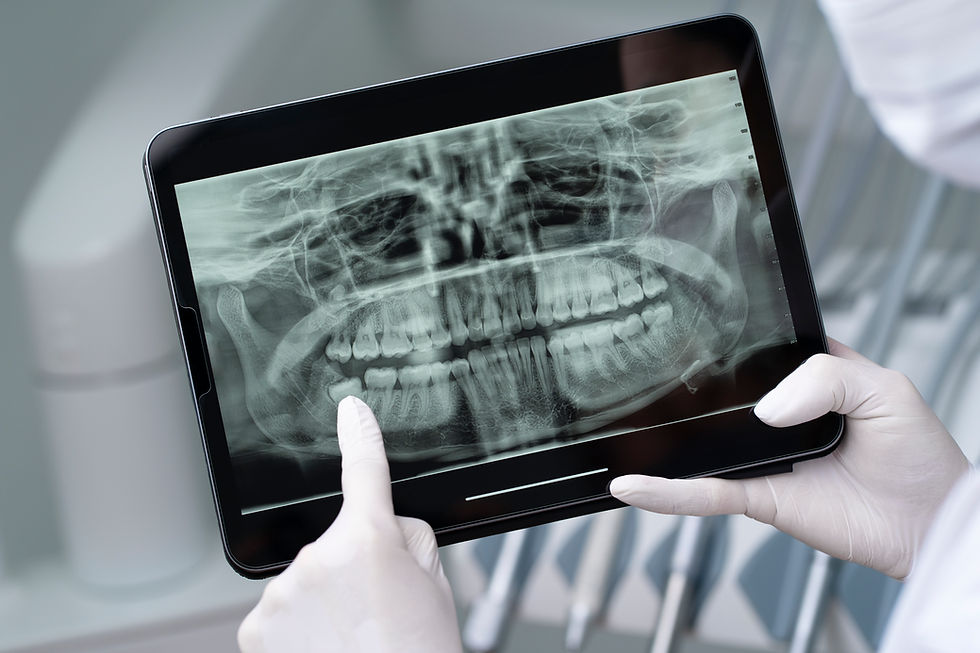
A middle-aged adult patient came in with impacted lower wisdom teeth. Although he was not experiencing severe pain, the panoramic X-ray showed a different story. Both lower wisdom teeth were growing sideways and pressing against the second molars, causing bone loss and decay.
Over time, impacted wisdom teeth can create deep pockets behind the second molars. These areas are very hard to clean, even for patients who brush and floss well. Food, bacteria, and inflammation can collect there silently. In this case, the impacted wisdom teeth had already started to contribute to bone loss around the back side of the second molars. Once bone is lost, it typically does not grow back without guided bone regeneration. As we age, the body's natural healing ability decreases, making the bone loss more difficult to repair.
Many patients wait because “nothing hurts,” causing damage to go undetected. Impacted wisdom teeth can cause bone loss, gum problems, cavities on the second molars, infection, and sometimes make future treatment more complicated.
Early evaluation is especially important during the late teenage years or early adulthood, when wisdom teeth are developing and the roots may not be fully formed yet. Removing them earlier, when indicated, can often be easier and may reduce the risk of damaging nearby teeth.


Comments